


Stainless Steel Pipes in the Petrochemical Industry: Materials and Applications
Petrochemical plants rely on piping systems to transport process fluids, transfer heat and maintain stable production under demanding operating conditions. High temperatures, corrosive chemicals and pressure fluctuations can place significant demands on piping materials. Choosing the right stainless steel pipes in the petrochemical industry is therefore essential for equipment reliability, maintenance planning and long-term operating performance.
From refineries and fertilizer plants to chemical processing facilities, stainless steel is widely used where corrosion resistance, mechanical strength and temperature performance are important.
Where Are Stainless Steel Pipes Used in Petrochemical Plants?
1. Furnace Tubes and Heat Exchangers
Refinery heaters and heat exchangers expose tubes to elevated temperatures and, depending on the process, oxidation or corrosive media. Suitable heat-resistant stainless steel grades can help maintain performance under these conditions.
Tube selection depends on operating temperature, pressure, fluid composition and the equipment design code.
2. Process Fluid Transportation
Petrochemical facilities use piping to carry hydrocarbons, chemicals, cooling water and other process fluids. Compared with ordinary carbon steel, stainless steel can offer better corrosion resistance in many services, helping reduce corrosion-related maintenance when the grade is correctly selected.
Seamless stainless steel pipes are used in various process applications, subject to the relevant pressure, size and code requirements.
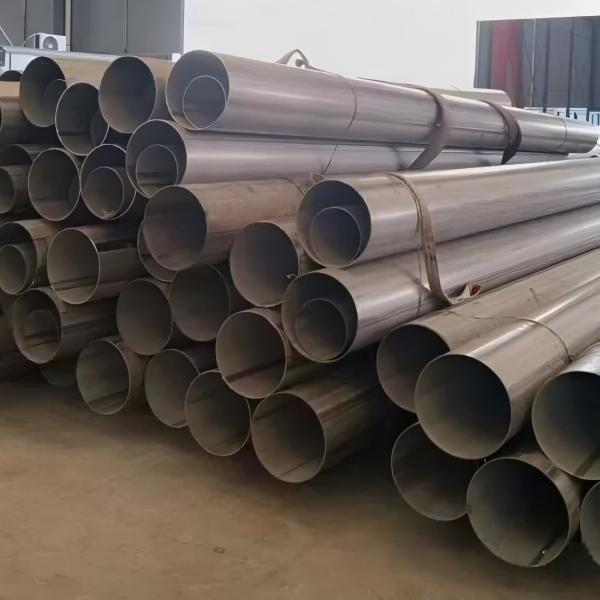
Stainless steel pipes for refinery process lines
3. Fertilizer and Chemical Production
Fertilizer manufacturing involves different chemical environments, including services that may require enhanced resistance to corrosion. Grades such as 316L and specialized alloys may be considered depending on the process chemistry, temperature and concentration.
For demanding applications, material selection should be based on actual operating conditions rather than grade designation alone.
4. Oil and Gas Equipment
Stainless steel tubing and piping are used in selected refinery, production and auxiliary systems. Applications involving carbon dioxide, chlorides or other aggressive substances require particular attention to corrosion mechanisms, pressure and material compatibility.
Which Stainless Steel Grades Are Commonly Considered?
| Grade | Typical Selection Considerations |
| 304 / 304L | General industrial service and suitable process environments |
| 316 / 316L | Improved resistance to many chloride-containing environments compared with 304 |
| 321 | Stabilized austenitic grade for selected elevated-temperature applications |
| 316Lmod | Specialized chemical-process applications, subject to the specified material standard |
| 2RE69 | Specialized chemical industry service where explicitly specified |
These grades are not interchangeable. The correct choice depends on chemical composition, temperature, pressure, fabrication requirements and the applicable product standard.
How to Select Stainless Steel Pipes for Petrochemical Plants
When specifying stainless steel pipes in the petrochemical industry, engineers and procurement teams should review several factors before placing an order:
Operating conditions: Design pressure, temperature and process-fluid composition.
Corrosion mechanism: General corrosion, pitting, crevice corrosion or stress corrosion cracking.
Pipe dimensions: Outside diameter, wall thickness and required length.
Manufacturing route: Seamless or welded construction, according to the design requirements.
Applicable standards: Confirm the required product specification and dimensional standard.
Inspection and documentation: Chemical analysis, mechanical testing, heat-treatment records and non-destructive examination as required by the project.
A higher-alloy grade is not automatically the best option. The objective is to select a material that meets the service requirements without adding unnecessary material cost.
Ganyeah Group: Stainless Steel Solutions for Petrochemical Projects
Ganyeah Group supports industrial customers sourcing stainless steel products for demanding pipeline and process applications. Depending on the project specification, requirements may include stainless steel pipes and tubes, material-grade selection, dimensional control, inspection and quality documentation.
For example, when a petrochemical equipment buyer requests 316L tubing for a heat exchanger, the selection review should consider the process medium, design temperature, pressure, dimensions and applicable standard before the final specification is confirmed.
This project-oriented approach helps customers move beyond a basic price inquiry and toward a material specification suited to the actual operating environment.
To request a quotation, provide the required grade, pipe size, wall thickness, quantity, product standard, operating conditions and inspection requirements. Ganyeah Group can review the information and discuss the appropriate supply options.
The performance of petrochemical piping depends on more than the stainless steel grade alone. Material composition, manufacturing quality, wall thickness and operating conditions all influence service reliability.
Selecting stainless steel pipes in the petrochemical industry with these factors in mind helps engineers balance corrosion resistance, mechanical performance and lifecycle cost. With clear technical requirements and appropriate material documentation, Ganyeah Group can support customers sourcing stainless steel products for refinery, chemical and fertilizer projects.
Frequently Asked Questions
1. Why is stainless steel used in petrochemical plants?
It offers corrosion resistance, mechanical strength and, for suitable grades, good performance at elevated temperatures. The appropriate material depends on the specific process conditions.
2. Is 316L better than 304L for petrochemical applications?
316L generally provides improved resistance to many chloride-related corrosion conditions, but it is not suitable for every chemical environment. The process medium and operating conditions should determine the choice.
3. Are seamless stainless steel pipes suitable for refineries?
Seamless pipes are used in many refinery and process applications. Their suitability depends on pressure, temperature, dimensions, the applicable code and project specifications.
4. What information is needed for a quotation?
Provide the material grade, dimensions, wall thickness, quantity, applicable standard, operating conditions and required inspection documents. These details help the supplier assess the request accurately.