


Nuclear Grade Stainless Steel for Reactor and Nuclear Power Applications
Nuclear power systems operate under demanding combinations of temperature, pressure, radiation, water chemistry and mechanical stress. For these applications, material selection is not simply about corrosion resistance—it is about maintaining predictable performance throughout the service life of critical equipment.
This is why nuclear grade stainless steel is widely used across nuclear power systems, from reactor-related components and cooling circuits to tanks, heat exchangers, spent fuel facilities and waste-handling equipment. Stainless steels are recognized for their corrosion resistance, strength, durability and fabrication performance in demanding power-generation environments.
Why Is Stainless Steel Important in Nuclear Power?
Stainless steel forms a protective chromium-rich passive film that helps resist corrosion in many water-based environments. In reactor service, this passive behavior can provide very low general corrosion rates when the material and water chemistry are properly controlled.
For nuclear applications, however, corrosion resistance alone is not enough.
Engineers also need to evaluate:
- Chemical composition and residual elements
- Mechanical properties
- Radiation exposure
- Temperature and pressure
- Water chemistry
- Stress corrosion cracking resistance
- Welding and heat treatment
- Inspection and traceability
- Applicable nuclear design and material standards
The material specification therefore needs to be developed around the actual component and service conditions.
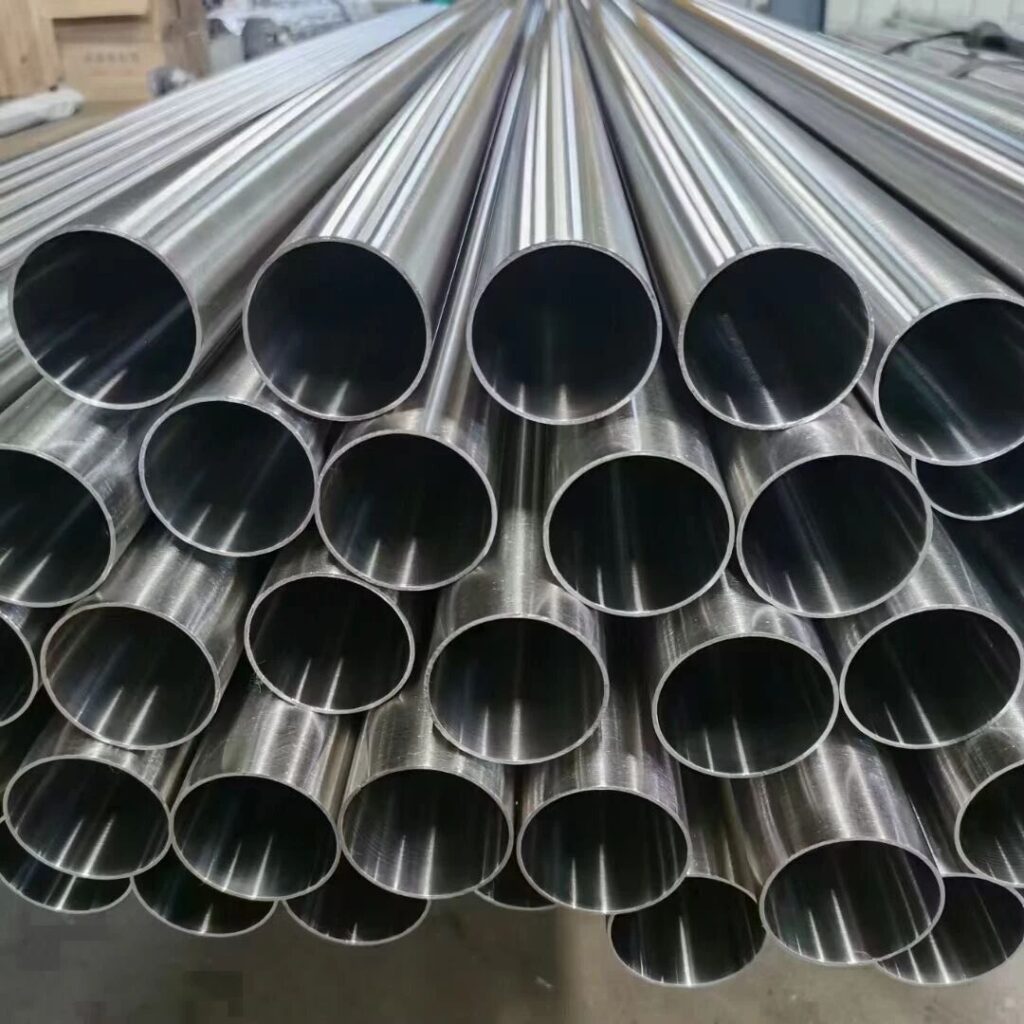
Nuclear grade stainless steel for reactor components
Common Stainless Steel Grades for Nuclear Applications
304L Stainless Steel
304L is a low-carbon austenitic stainless steel widely used where good corrosion resistance and weldability are required.
Its low carbon content helps reduce sensitization during welding. IAEA technical literature notes that low-carbon grades such as 304L and 316L have been used to improve resistance to intergranular stress corrosion cracking compared with conventional 304 stainless steel.
316L Stainless Steel
316L contains molybdenum in addition to chromium and nickel, providing improved resistance to certain chloride-containing environments compared with 304L.
It is used in selected nuclear components and piping systems, with the final grade determined by the specific service environment and design requirements.
Super Duplex 2507
For applications requiring higher strength and enhanced resistance to localized corrosion, super duplex stainless steel such as 2507 / UNS S32750 can be considered.
Its combination of austenitic-ferritic microstructure, chromium, molybdenum and nitrogen makes it attractive for demanding corrosion environments.
254 SMO
254 SMO / UNS S31254 is a high-alloy austenitic stainless steel with high chromium, molybdenum and nitrogen contents.
It can provide significantly higher resistance to pitting and crevice corrosion than conventional 304L or 316L in suitable environments, making it an option for selected aggressive water and process conditions.
The final material should always be confirmed against the nuclear system’s design specification rather than selected by corrosion resistance alone.
Where Is Nuclear Grade Stainless Steel Used?
Nuclear grade stainless steel can be found in a wide range of nuclear-related equipment and auxiliary systems.
| Application | Typical Stainless Steel Products |
| Reactor systems | Plates, pipes, tubes and fabricated components |
| Cooling systems | Pipes, tubes, tanks and heat exchangers |
| Water treatment | Tanks, filters and process equipment |
| Spent fuel facilities | Storage equipment and pool-related components |
| Waste treatment | Tanks, containers and processing equipment |
| Auxiliary systems | Piping, vessels, supports and components |
Stainless steel applications in nuclear power can include process and cooling-water piping, tanks, vessels, heat exchangers, pumps, valves, fuel-handling equipment and waste-handling systems.
Material Control Is Critical in Nuclear Projects
One of the key differences between ordinary industrial stainless steel and material supplied for nuclear projects is the level of control required throughout the supply chain.
Chemical composition may need to be adjusted to meet project requirements, while residual elements can also become important.
For example, cobalt content may require strict control because cobalt-59 can become activated under neutron irradiation. Therefore, nuclear material specifications may include tighter controls on cobalt and other residual elements than standard commercial grades.
Documentation and traceability are equally important. Depending on the project, customers may require:
- Heat number traceability
- Chemical composition reports
- Mechanical test results
- Heat treatment records
- Non-destructive testing
- Dimensional inspection
- Surface inspection
- Material certificates
- Full manufacturing and quality documentation
Ganyeah Group: Stainless Steel Solutions for the Nuclear Energy Sector
Ganyeah Group provides high-performance corrosion-resistant stainless steel products for demanding energy and industrial applications.
For nuclear-related projects, our material selection approach can cover conventional grades such as 304L and 316L, as well as higher-alloy materials such as 2507 super duplex and 254 SMO, depending on the operating environment and project specification.
Ganyeah’s nuclear-sector experience also supports customers beyond material supply. For projects with strict technical requirements, our dedicated project team can coordinate material specifications, chemical composition, testing, quality assurance and documentation throughout the order process.
This is particularly important when customers require customized chemistry or tighter limits on residual elements such as cobalt.
Supporting Nuclear Projects Across the Material Lifecycle
From material selection to final documentation, nuclear projects require consistency at every stage.
Ganyeah Group’s approach is to review the customer’s requirements first, then match:
Application → material grade → chemistry → dimensions → manufacturing condition → testing → documentation.
This helps customers avoid treating nuclear stainless steel as a standard commodity product and instead build a specification around the actual service conditions.
Choosing the Right Nuclear Stainless Steel
There is no single stainless steel grade suitable for every nuclear application.
304L may provide an effective solution for many general applications, while 316L can be considered where greater resistance to chloride-containing environments is required. For more aggressive corrosion conditions, 2507 or 254 SMO may provide additional performance.
The correct choice depends on the complete combination of temperature, pressure, water chemistry, radiation, stress, fabrication requirements and applicable nuclear standards.
For nuclear projects, the safest approach is not to choose the highest-alloy material by default, but to select the grade that provides the required performance with verified technical and quality documentation.
Nuclear power demands materials that can perform reliably under tightly controlled and often severe operating conditions. Stainless steel remains an important material family because it combines corrosion resistance, mechanical performance, durability and fabrication flexibility.
From 304L and 316L to 2507 and 254 SMO, Ganyeah Group can support different nuclear-related applications with project-specific stainless steel material solutions.
For customers sourcing nuclear grade stainless steel, the key is not simply choosing a grade—it is controlling the complete material specification, testing and documentation process.
Contact Ganyeah Group with your nuclear project specification, material grade, dimensions and testing requirements for a technical review and quotation.
FAQ
1. What is nuclear grade stainless steel?
Nuclear grade stainless steel refers to stainless steel materials manufactured, specified and controlled for particular nuclear applications. Requirements may include tighter chemistry, mechanical properties, testing, traceability and documentation than standard commercial products.
2. Why is 304L used in nuclear applications?
304L has low carbon content, good corrosion resistance and good weldability. Its low carbon chemistry can reduce sensitization-related concerns during welding, making it useful for selected nuclear components.
3. What is the difference between 304L and 316L for nuclear projects?
316L contains molybdenum and generally offers better resistance to chloride-related localized corrosion than 304L. The final selection depends on the actual water chemistry and design requirements.
4. Can 2507 and 254 SMO be used in nuclear projects?
They can be considered for selected applications requiring higher corrosion resistance or strength. Their suitability must be verified against the specific nuclear system, design code and project specification.
5. Why is cobalt controlled in some nuclear stainless steel?
Cobalt can become activated under neutron irradiation. Therefore, some nuclear material specifications place tighter limits on cobalt and other residual elements.
6. What documents are important when buying stainless steel for a nuclear project?
Depending on the project, customers may require material certificates, heat-number traceability, chemical analysis, mechanical test results, heat-treatment records, NDT reports, dimensional inspection and other quality documentation.