


Stainless Steel Pipes for Marine Applications: The Backbone of Modern Shipbuilding and Offshore Engineering
As the global maritime industry continues to expand, demand for reliable pipeline materials is growing rapidly. From crude oil transportation and LNG carriers to offshore oil and gas platforms, stainless steel pipes for marine applications have become essential components that ensure operational safety, corrosion resistance, and long-term reliability.
Modern vessels operate in highly corrosive environments while handling seawater, fuel, hydraulic fluids, cryogenic liquids, and chemical media under varying pressures and temperatures. Selecting the right stainless steel piping system is therefore critical to vessel performance and lifecycle cost.
At Ganyeah Group, we manufacture premium stainless steel pipes and tubes that meet the demanding requirements of shipbuilding, offshore engineering, and marine transportation projects worldwide.
Why Stainless Steel Pipes Are Essential for Modern Marine Applications
The rapid development of global shipping, offshore oil exploration, and LNG transportation has significantly increased the demand for stainless steel pipes for marine applications.
Large vessels such as Very Large Crude Carriers (VLCCs) and Very Large Gas Carriers (VLGCs) often require hundreds of tons of stainless steel piping for cargo heating, loading, unloading, and transfer systems. Meanwhile, LNG carriers rely on specialized stainless steel pipes capable of operating under cryogenic and ultra-low temperature conditions.
Compared with conventional carbon steel, stainless steel offers:
- Excellent corrosion resistance in seawater environments
- High mechanical strength
- Long service life
- Low maintenance costs
- Outstanding welding performance
- Reliable performance under high pressure and varying temperatures
These advantages make stainless steel pipes for marine applications the preferred solution for modern shipbuilders.
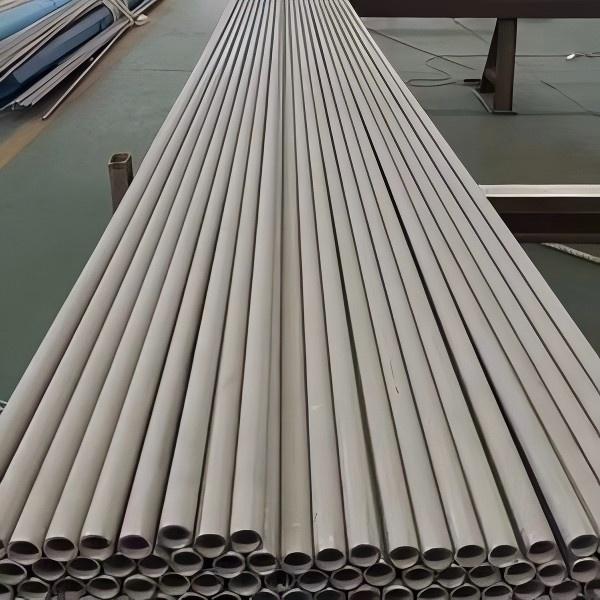
316L stainless steel pipes for marine applications used in shipbuilding, LNG carriers and offshore engineering manufactured by Ganyeah Group
Marine Piping Systems: Functional and Structural Applications
Marine piping systems are generally divided into two major categories:
1. Functional Piping Systems
Functional piping is responsible for transporting fluids, gases, and other operating media throughout the vessel.
These systems are further divided into:
Conventional Ship Systems
Typical applications include:
- Ballast water systems
- Bilge drainage
- Freshwater supply
- Firefighting systems
- Fuel oil pipelines
- Lubricating oil systems
- Hydraulic oil systems
- Cargo oil pipelines
- Tank cleaning systems
- Ventilation systems
- Inert gas systems
- Heating pipelines
- Foam fire suppression
- Air systems
- Instrumentation lines
- Remote valve control systems
These piping systems generally operate within:
- Working pressure:7 MPa to 40 MPa
- Operating temperature:60°C to 300°C
Because these systems transport critical operating media, selecting durable stainless steel pipes for marine applications is essential for safe vessel operation.
Specialized Marine Equipment Systems
Specialized vessels require additional piping designed for extreme operating conditions.
These include:
- LNG carriers
- LPG carriers
- Offshore production vessels
- Floating storage facilities
- Cryogenic transportation systems
Such applications often require advanced stainless steel grades capable of maintaining strength and toughness at extremely low temperatures while resisting corrosion from aggressive process media.
Structural Stainless Steel Pipes on Ships
In addition to fluid transportation, stainless steel pipes also serve numerous structural functions aboard ships.
Typical structural applications include:
- Masts
- Flag poles
- Safety railings
- Handrails
- Equipment supports
- Steel framework
- Deck structures
These components require excellent corrosion resistance because they are continuously exposed to seawater, salt spray, humidity, and changing weather conditions.
Choosing the Right Stainless Steel Grades
Different marine systems require different stainless steel materials depending on operating conditions.
Common grades include:
304L Stainless Steel
Suitable for freshwater systems and general marine structures where corrosion exposure is moderate.
316L Stainless Steel
The most widely used grade for marine piping due to its excellent resistance to chloride corrosion.
Typical applications include:
- Seawater systems
- Cargo pipelines
- Fire protection
- Cooling water
- Hydraulic piping
Duplex Stainless Steel (S32205 / S31803)
Ideal for offshore platforms and high-pressure seawater systems requiring:
- Higher strength
- Better chloride resistance
- Improved stress corrosion cracking resistance
Super Austenitic Stainless Steel (S31254 / 254 SMO)
Recommended for extremely aggressive seawater and desalination environments where maximum corrosion resistance is required.
Why Surface Quality and Welding Matter
Material selection alone does not guarantee long-term performance.
The durability of marine stainless steel piping also depends on manufacturing quality.
Important production processes include:
- Precision tube forming
- TIG welding
- Plasma welding
- Pickling and passivation
- Internal weld protection
- Surface finishing
- Hydrostatic pressure testing
- Non-destructive testing (NDT)
High-quality surface treatment minimizes crevice corrosion, while precision welding ensures reliable performance under pressure and vibration.
Ganyeah Group’s Experience in Marine Projects
Ganyeah Group has supplied stainless steel piping products for customers serving shipbuilding, offshore engineering, petrochemical terminals, and marine infrastructure projects across Asia, the Middle East, and Europe.
One recent export project involved the production of customized 316L stainless steel pipes for marine applications used in auxiliary piping systems for offshore equipment. The project required:
- Tight dimensional tolerances
- High-quality TIG welded tubes
- Pickled and passivated surfaces
- Pressure testing
- Material traceability
- Third-party inspection documentation
Through strict manufacturing control and comprehensive quality inspection, the products were delivered successfully and met all project specifications for corrosion resistance and long-term service reliability.
This project reflects Ganyeah Group’s commitment to supplying dependable stainless steel piping solutions for demanding marine environments.
Why Choose Ganyeah Group?
As a professional stainless steel manufacturer, Ganyeah Group provides complete pipeline solutions for marine and offshore industries.
Our advantages include:
- Advanced stainless steel pipe manufacturing equipment
- Wide range of austenitic, duplex, and super stainless steel grades
- Strict quality control from raw material to final inspection
- Custom dimensions and project-based manufacturing
- International export experience
- Fast technical support and global logistics
Whether your project involves commercial shipbuilding, LNG transportation, offshore platforms, or marine infrastructure, Ganyeah Group delivers reliable stainless steel piping solutions designed for long service life.
The marine industry demands piping systems that can withstand corrosion, pressure, vibration, and extreme temperatures. Stainless steel pipes for marine applications provide the durability, strength, and reliability required for modern vessels, offshore platforms, and LNG transportation systems.
With extensive manufacturing experience, advanced production technology, and comprehensive quality management, Ganyeah Group continues to support global shipbuilders and offshore engineering companies with premium stainless steel pipe solutions tailored to challenging marine environments.
If you are looking for a trusted supplier of stainless steel pipes for marine applications, Ganyeah Group is ready to support your next marine project with high-quality products and professional technical service.
Frequently Asked Questions (FAQ)
1. Why are stainless steel pipes widely used in marine applications?
Stainless steel offers superior corrosion resistance, excellent mechanical strength, long service life, and lower maintenance costs, making it ideal for seawater and offshore environments.
2. Which stainless steel grade is best for seawater piping?
316L stainless steel is the most common choice. For highly corrosive seawater or offshore applications, duplex stainless steel (S32205) or super austenitic stainless steel (S31254) may provide better performance.
3. What piping systems use stainless steel pipes on ships?
Stainless steel pipes are commonly used in ballast water systems, fuel pipelines, hydraulic systems, firefighting systems, cargo handling systems, LNG pipelines, cooling systems, and structural components.
4. Why is welding quality important for marine stainless steel pipes?
Proper welding ensures leak-free operation, maintains corrosion resistance, and prevents failures caused by vibration, pressure fluctuations, and long-term marine exposure.
5. Can Ganyeah Group manufacture customized marine stainless steel pipes?
Yes. Ganyeah Group supplies customized stainless steel pipes in various grades, sizes, wall thicknesses, and surface finishes according to international standards and project specifications.