


Analysis of Typical Defects in Stainless Steel Medium and Heavy Plates
Stainless steel medium and heavy plates stand as foundational materials across critical industries, defined by precise thickness specifications: medium plates (4.0–25.0mm), heavy plates (25.0–100.0mm), and extra-heavy plates (over 100.0mm). Renowned for exceptional corrosion resistance, structural strength, and weldability, these plates are indispensable in fabricating pressure vessels, industrial boilers, bridge components, ship hulls, automotive frames, and heavy machinery parts. At Ganyeah Group, delivering flawless stainless steel medium and heavy plates is central to our manufacturing ethos-yet surface and internal defects remain persistent challenges in production, directly impacting finish quality, mechanical performance, and project integrity. Below, we analyze four common defect morphologies, their root causes, and proactive control measures to ensure premium, defect-free stainless steel plate supply.
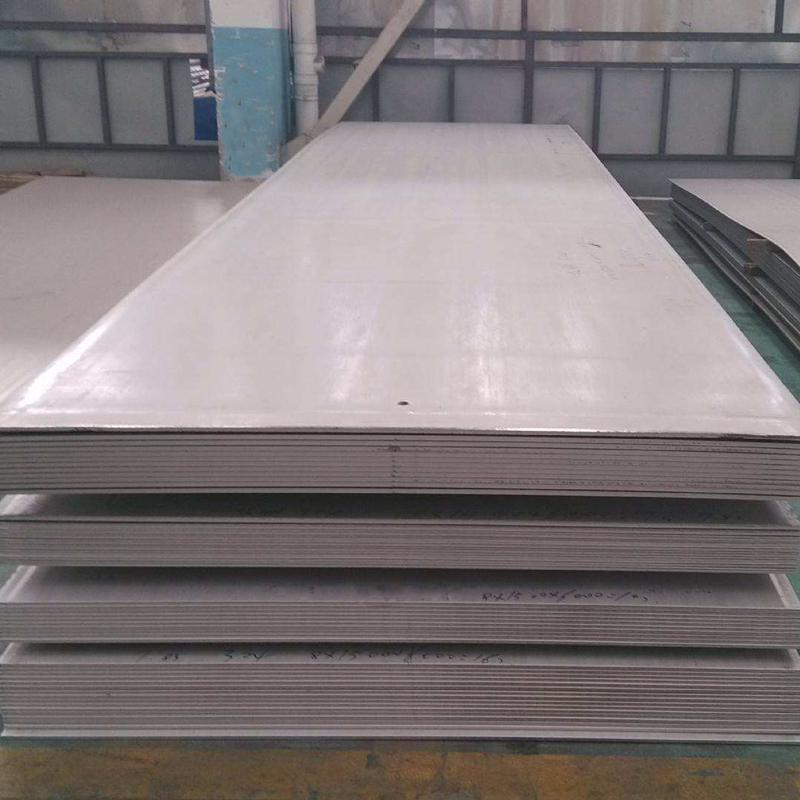
Standard stainless steel plate sizes in warehouse
1. Small Longitudinal Cracks
Morphology Characteristics
Small longitudinal cracks are fine, linear surface defects on stainless steel medium and heavy plates, measuring <200mm in length, <3mm in width, and <0.3mm in depth.
These micro-cracks align with the rolling direction, appearing as faint, thin lines often scattered across the plate surface—easily overlooked but detrimental to corrosion resistance and structural consistency.
Root Causes
Primary formation stems from tiny non-metallic impurities (oxides, sulfides) infiltrating the molten steel during continuous casting, becoming trapped in the mold and solidifying within the slab matrix. Inadequate mold flux quality or disrupted molten steel flow also promotes impurity entrapment, evolving into micro-cracks during hot rolling.
2. Peak-Shaped Cracks
Morphology Characteristics
Distinctive “peak-like” transverse cracks, peak-shaped cracks occur exclusively on the lower plate surface, 5–60mm from the edge, perpendicular to the rolling direction. Visually resembling small mountain peaks, they concentrate along plate edges, with severity escalating in thicker, wider stainless steel medium and heavy plates.
Root Causes
Linked to continuous casting flaws: transverse corner cracks on the outer arc of the continuous casting slab. High-temperature brittleness, uneven cooling, or mechanical stress during bending creates sub-surface corner cracks, which extend to the plate surface during rolling as distinct peak-shaped defects.
3. Edge Line Cracks
Morphology Characteristics
Edge line cracks manifest as multiple parallel longitudinal cracks, 20–80mm from plate edges, varying in length and depth. A defining trait is their thickness/width correlation: thicker, wider stainless steel medium and heavy plates face higher risk of severe, densely clustered edge cracks due to uneven edge deformation during rolling.
Root Causes
Formed in hot rolling: excessive lateral expansion and uneven stress cause the slab’s sharp corners to fold/flip toward the surface. Poor heating uniformity creates top-bottom temperature differentials, increasing deformation resistance discrepancies and exacerbating edge stress concentrations.
4. Inclusions and Scabs
Morphology Characteristics
Inclusions (foreign metallic/non-metallic particles) and scabs (loose, crust-like surface layers) appear as irregular discolored patches, hard particles, or raised flakes on stainless steel medium and heavy plates. They cluster near edges or flame-cleaned areas, with distinct patterns post slab conditioning (flame scarfing, grinding).
Root Causes
Trapped oxidized slag, scale, or refractory debris from incomplete casting slab refining/cleaning. Residual slag/scale from flame conditioning is rolled into the surface, forming scabs; exogenous inclusions (ladle slag, mold powder) become embedded during casting, creating visible internal/surface defects.
Ganyeah Group’s Proactive Defect Control Measures
To eliminate these defects and deliver superior stainless steel medium and heavy plates, Ganyeah Group enforces rigorous process controls:
- Mold & Purity Monitoring: Regular mold maintenance + water quality/impurity testing to prevent foreign particle contamination during casting.
- Equipment Lifecycle Management: Proactive sector maintenance—no over-aged equipment, timely roller replacement to avoid slab surface damage.
- Precision Cooling Control: Zoned cooling in the bending segment stabilizes slab corner temperatures, avoiding high-temperature brittleness zones.
- Optimized Slab Sizing: Wide-width slabs for large plates reduce rolling width expansion, minimizing edge deformation and crack risk.
- Uniform Heating Technology: Advanced furnace systems ensure consistent through-thickness heating, lowering top/bottom deformation resistance differences.
- High-Precision Finishing: Automated flame cleaning + grinding removes slag/scale completely, preventing secondary defects from incomplete refining.
Surface and internal defects directly compromise the quality and reliability of stainless steel medium and heavy plates, but targeted process controls effectively mitigate these issues. At Ganyeah Group, we integrate advanced metallurgical expertise, precision production, and strict quality assurance to minimize cracks, inclusions, and scabs—ensuring our stainless steel plates meet the highest standards for critical industrial applications. For projects demanding flawless, high-performance stainless steel medium and heavy plates, Ganyeah Group is your trusted partner for consistent quality and technical excellence.
FAQ
Q1: What thickness ranges classify stainless steel medium and heavy plate?
A: Medium plates: 4.0–25.0mm; heavy plates: 25.0–100.0mm; extra-heavy plates: over 100.0mm.
Q2: How do small longitudinal cracks affect stainless steel medium and heavy plate?
A: They weaken corrosion resistance, create stress points, and may expand under load, reducing service life.
Q3: Are edge cracks more common in specific plate sizes?
A: Yes-thicker, wider plates face higher edge crack risk due to greater rolling deformation stress.
Q4: Can inclusions and scabs be removed post-production?
A: Minor surface defects may be grindable, but deep/sub-surface flaws are irreversible; prevention is critical.
Q5: How does Ganyeah Group ensure defect-free stainless steel medium and heavy plate?
A: Strict mold control, uniform heating, precision cooling, optimized slab sizing, and automated high-precision finishing.
Q6: What industries use Ganyeah’s stainless steel medium and heavy plate?
A: Pressure vessels, boilers, shipbuilding, bridges, automotive, chemical processing, and industrial machinery.
Q7: Does Ganyeah Group offer custom sizes for stainless steel medium and heavy plate?
A: Yes-custom thicknesses, widths, lengths, and grades (304, 316L, 310S, 2205, etc.) to meet project specifications.