


316 Stainless Steel Seamless Pipe for Marine Applications: Four Key Uses
Seawater exposure creates persistent corrosion challenges for industrial piping. Chloride ions, moisture and temperature fluctuations can gradually damage unsuitable materials, increasing maintenance requirements and the risk of leakage.
316 stainless steel contains molybdenum, which improves its resistance to pitting and crevice corrosion compared with standard 304 stainless steel. Its combination of corrosion resistance, mechanical properties and fabrication flexibility makes it a practical option for many marine systems.
A 316 stainless steel seamless pipe for marine applications can be considered where reliable fluid transport and resistance to marine exposure are required. However, the final grade and pipe specifications should always match the actual pressure, temperature and seawater conditions.
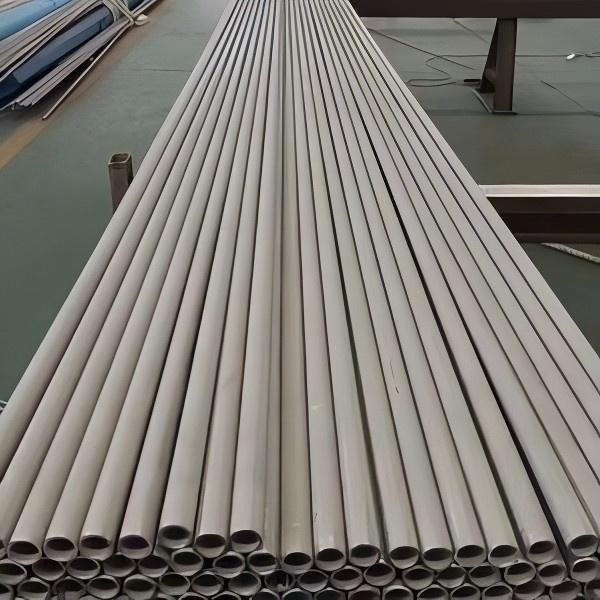
316L stainless steel pipes for marine applications used in shipbuilding, LNG carriers and offshore engineering manufactured by Ganyeah Group
Four Important Applications of 316 Stainless Steel Seamless Pipe
1. Offshore Oil and Gas Platforms
Offshore oil and gas facilities rely on piping systems to transport fluids and support auxiliary operations. Pipes may be exposed to high humidity, salt spray, elevated temperatures and demanding operating pressures.
316 stainless steel seamless pipes can be used in selected offshore piping applications where their corrosion resistance and mechanical properties meet the design requirements. Their seamless construction also eliminates the longitudinal weld seam found in welded pipes.
For high-pressure production lines, sour service or deepwater applications, material selection requires additional evaluation. Pressure ratings, wall thickness, chloride concentration and hydrogen sulfide exposure must be considered before specifying 316.
2. Seawater Desalination Heat Exchangers
Heat exchange is an essential part of thermal desalination processes and other seawater treatment systems. Piping and tubing must withstand continuous contact with seawater while accommodating operating temperature changes.
316 stainless steel tubing can be used in selected heat exchanger systems where the chloride concentration and temperature remain within suitable limits. Its corrosion resistance helps maintain equipment reliability and supports consistent heat-transfer operations.
For highly concentrated brine or elevated-temperature service, higher-alloy materials such as 2205, 2507 or 904L may be more appropriate, depending on the process conditions.
3. Shipboard Seawater Cooling Systems
Marine engines generate considerable heat during operation. Seawater cooling systems transfer this heat away from critical equipment, making piping reliability essential to vessel operation.
316 stainless steel pipes are used in selected seawater cooling lines because of their resistance to marine atmospheric exposure and many seawater-related corrosion conditions. Proper installation, drainage, flow design and regular inspection are also important for reducing corrosion risks during long-term service.
4. Marine Aquaculture Facilities
Marine aquaculture cages and supporting structures remain exposed to seawater throughout their service life. Corrosion can weaken structural components and increase maintenance costs.
316 stainless steel pipes can be considered for selected cage frames, support structures and connecting components. Their corrosion resistance helps maintain structural stability, while their strength and fabrication characteristics support different frame designs.
For continuously submerged structures or locations with severe biofouling and chloride exposure, the suitability of 316 should be assessed against the expected service life and maintenance plan.
What to Consider When Selecting 316 Stainless Steel Pipes
Choosing the right 316 stainless steel seamless pipe for marine applications involves more than confirming the material grade. Buyers and project engineers should review:
Operating conditions: Design pressure, temperature and fluid composition.
Pipe dimensions: Outside diameter, wall thickness and required tolerances.
Corrosion exposure: Seawater immersion, salt spray, chloride concentration and potential crevice conditions.
Applicable standards: Required material and dimensional standards.
Inspection and documentation: Chemical composition, mechanical testing and material certificates according to project requirements.
For particularly aggressive marine environments, comparing 316 with 316L, 2205 duplex or 2507 super duplex stainless steel can help identify a more suitable solution.
Ganyeah Group: Stainless Steel Pipe Solutions for Marine Applications
Ganyeah Group supplies stainless steel materials for industrial piping and equipment manufacturing. For marine-related projects, material selection can include 316 and 316L stainless steel, as well as duplex and higher-alloy grades when the service conditions require them.
For a typical seawater cooling or heat exchanger inquiry, the technical review may cover pipe dimensions, material specifications, operating temperature, corrosion exposure and inspection documentation before confirming the suitable product.
Whether your project involves offshore equipment, desalination systems, shipbuilding or marine aquaculture, Ganyeah Group can assist with reviewing stainless steel material requirements and product specifications.
Contact Ganyeah Group to discuss your 316 stainless steel seamless pipe requirements and request a quotation.
Frequently Asked Questions
1.Why is 316 stainless steel used in marine applications?
316 contains molybdenum, which improves resistance to pitting and crevice corrosion. This makes it suitable for many marine atmospheric and selected seawater applications.
2.Is 316 stainless steel seamless pipe suitable for seawater?
It can be suitable for selected seawater systems, but continuous immersion, high chloride concentrations and elevated temperatures may increase corrosion risks. The application should be evaluated before material approval.
3.What is the difference between 316 and 316L stainless steel pipe?
316L has a lower carbon content than standard 316, helping reduce the risk of sensitization during welding. The choice depends on fabrication methods and project requirements.
4.When should 2205 or 2507 be considered instead of 316?
2205 or 2507 may be preferred where higher strength or stronger resistance to chloride-induced localized corrosion is required, such as in more aggressive seawater environments.