


2Cr13 (20Cr13) Martensitic Stainless Steel: Properties, Heat Treatment, and Applications
2Cr13 stainless steel, also known under the new designation 20Cr13, is classified as a martensitic stainless steel according to GB standards. While it belongs to the stainless steel family, its performance characteristics clearly distinguish it from austenitic grades such as 304 or 316.
Thanks to its excellent mechanical properties, good machinability, and cost efficiency, 2Cr13 steel is widely used in mechanical and structural applications where corrosion resistance is required but not critical.
At Ganyeah Group, we supply and process martensitic stainless steel materials, including 2Cr13, for customers seeking a balanced solution between performance and cost.
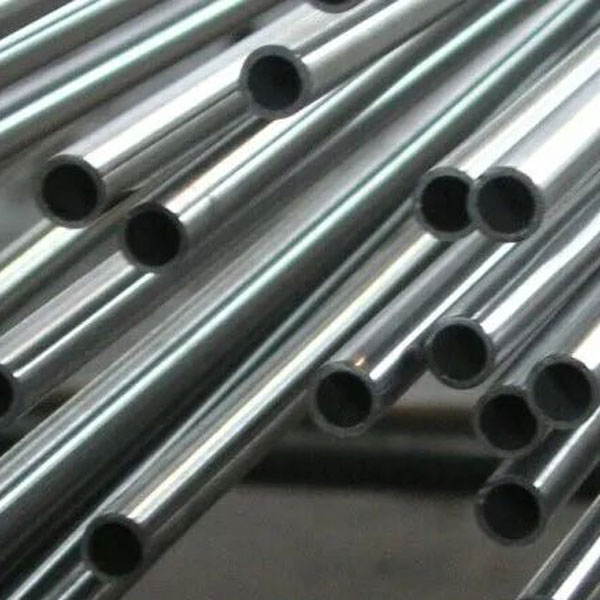
2Cr13 martensitic stainless steel pipes
Standard and Material Classification
- Material grade: 2Cr13 / 20Cr13
- Standard: GB/T 1220-2007
- Steel type: Martensitic stainless steel
This grade forms a martensitic microstructure after quenching, providing higher hardness and strength compared to common austenitic stainless steels.
Key Properties of 2Cr13 Martensitic Stainless Steel
Mechanical Performance
After proper heat treatment, 2Cr13 martensitic stainless steel offers:
- High hardness in the quenched condition
- Good strength and wear resistance
- Stable mechanical properties for precision machining
Its density is approximately 7.75 g/cm³, consistent with most martensitic stainless steel grades.
Corrosion Resistance
2Cr13 provides moderate corrosion resistance, suitable for atmospheric environments and mild service conditions. While it does not match the corrosion performance of 304 stainless steel, it performs reliably where exposure to strong acids or chlorides is limited.
This balance makes 2Cr13 stainless steel an economical alternative for many industrial components.
Heat Treatment and Hardness Control
Heat treatment plays a critical role in achieving optimal performance for 2Cr13 stainless steel.
- Typical quenching temperature: 980–1050°C
- 980°C oil quenching: Hardness around 45–50 HRC
- 1050°C oil quenching: Hardness increases by approximately 2 HRC, but grain coarsening and brittleness may occur
Based on industrial practice, quenching at around 1000°C is generally recommended to obtain a refined microstructure with balanced hardness and toughness.
Typical Applications of 2Cr13 Stainless Steel
Due to its strength and wear resistance after quenching, 2Cr13 martensitic stainless steel is commonly used for:
- Steam turbine blades
- Mechanical shafts and components
- Industrial tools and wear parts
- Structural components requiring machining accuracy
These applications benefit from the steel’s high hardness and good dimensional stability.
Welding Characteristics and Recommendations
As a martensitic stainless steel, 2Cr13 requires preheating before welding to reduce cracking risk.
Welding Guidelines
- Preheat temperature: 150–300°C
- Control weld dilution rate
- Use low current and avoid excessive weaving
- Post-weld tempering is recommended for stress relief
When welding 2Cr13 to carbon steel such as Q235, austenitic stainless steel electrodes can be used without preheating on the carbon steel side.
Recommended Welding Consumables
- Atmospheric corrosion resistance: G202, G207
- Preheat 150–300°C
- Post-weld tempering at 700–730°C
- Organic acid resistance and heat resistance: G211
- Preheat 150–300°C
- Improved plasticity: A102, A107, A202, A207, A302, A307
- Preheat required for repair welding and thick sections
Ganyeah Group Material Support
With extensive experience in stainless steel products, Ganyeah Group provides reliable supply and technical support for 2Cr13 / 20Cr13 martensitic stainless steel, including material selection guidance, processing advice, and quality control support.
We help customers choose the right stainless steel grade based on application environment, mechanical requirements, and cost considerations, ensuring both performance and long-term value.