


Why Do Stainless Steel Pipe Welds Turn Black? Causes, Risks, and Professional Solutions
During stainless steel pipe welding, weld seams sometimes appear dark gray or black. This phenomenon is not random—it is closely related to high-temperature oxidation, welding parameters, and shielding conditions.
At Ganyeah Group, we frequently help customers in food processing, chemical, shipbuilding, and energy industries understand why weld discoloration occurs and how to prevent it without compromising pipe performance.
1. Core Cause: High-Temperature Oxidation During Welding
Stainless steel mainly consists of iron (Fe) and chromium (Cr), with some grades containing nickel (Ni) and manganese (Mn).
During welding processes such as TIG welding, MIG welding, or argon arc welding, the weld seam and heat-affected zone (HAZ) are exposed to temperatures exceeding 1000°C.
At these temperatures, the original chromium-rich passive film is destroyed, allowing the metal surface to react rapidly with oxygen and form oxide layers.
Key Oxides Responsible for Black Welds
Iron Oxides (Primary Cause)
- FeO (wüstite) – black
- Fe₃O₄ (magnetite) – black
These oxides dominate when heat input is high and oxygen exposure is uncontrolled, making them the main reason stainless steel pipe welds turn black.
Chromium Oxides (Secondary Effect)
- Cr₂O₃ (chromium oxide) normally forms a gray-green protective film
- During welding, chromium oxidation mixes with iron oxides, resulting in dark gray or black weld discoloration rather than pure chromium oxide color
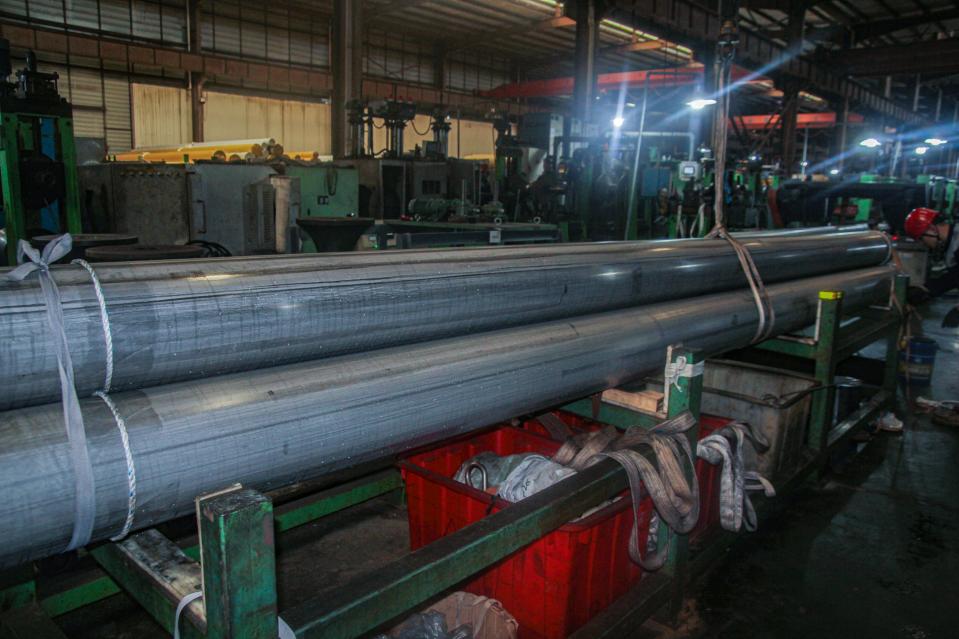
DNV stainless steel pipes for offshore platforms
2. Why Does Weld Blackness Vary? Key Influencing Factors
2.1 Shielding Gas Purity and Coverage
Stainless steel welding relies on argon shielding gas to isolate the weld pool from air.
Poor shielding occurs when:
- Argon purity is below 99.99%
- Gas flow is insufficient
- Torch distance is too far
- Welding speed is too fast
In these cases, oxygen enters the weld zone, intensifying oxidation and causing heavy black discoloration.
With proper shielding, welds may appear silver-white or light straw color, instead of black.
2.2 Welding Heat Input
Excessive heat input caused by:
- High welding current
- High arc voltage
- Slow travel speed
extends the time metal remains at elevated temperature, allowing thicker oxide layers to form.
Proper heat input control—matched to pipe thickness and welding method—significantly reduces oxidation.
2.3 Welding Environment
Environmental conditions also play a critical role:
- High humidity introduces moisture, which decomposes into oxygen and hydrogen
- Oil, dust, or contaminants release oxidizing gases during welding
- Outdoor welding is affected by wind, disrupting shielding gas flow
At Ganyeah Group, controlled indoor welding environments are standard for precision stainless steel pipes.
2.4 Surface Cleanliness Before Welding
If stainless steel pipes are not properly cleaned before welding, residual:
- Oil
- Rust
- Dust
- Old passive films
will burn or decompose, generating additional oxidizing gases and trapping oxide residues on the weld surface.
3. Does a Black Weld Affect Pipe Quality?
Structural Strength
Surface oxidation does not directly reduce weld strength.
Corrosion Resistance
However, black oxide layers:
- Destroy the chromium passive film
- Reduce corrosion resistance
- Increase risk of localized corrosion over time
This is especially critical in food, pharmaceutical, chemical, and hygienic systems.
If black welds are accompanied by defects such as porosity, slag inclusion, or lack of penetration, service safety may be compromised.
4. Proven Solutions for Black Welds
4.1 Pickling and Passivation
- Removes oxide layers
- Restores chromium-rich passive film
- Leaves welds with uniform silver or matte finish
This is a standard post-weld treatment at Ganyeah Group for corrosion-critical applications.
4.2 Mechanical Polishing
Used for:
- BA-grade stainless steel pipes
- Food and pharmaceutical systems
Polishing aligns weld surface roughness with the base material for hygiene and aesthetics.
4.3 Welding Process Optimization
Prevent oxidation at the source by:
- Using high-purity argon
- Optimizing heat input
- Improving shielding gas coverage
- Protecting welding environment from wind and contaminants
5. Special Requirements: Food, Pharmaceutical & New Energy Applications
In high-purity industries, black welds are unacceptable. Ganyeah Group applies strict controls:
- Ultra-high-purity argon (≥99.995%)
- Back purging (internal argon protection)
- Low heat-input welding (pulsed TIG)
- Pre-weld cleaning with alcohol and oxide removal
- Post-weld pickling, passivation, or BA polishing
These measures ensure weld seams are bright, clean, and corrosion-resistant.
Why Choose Ganyeah Group for Welded Stainless Steel Pipes
Ganyeah Group provides:
- Controlled welding environments
- Strict shielding gas management
- Application-specific post-weld treatments
- Stainless steel pipes for food, chemical, shipbuilding, and energy industries
Our goal is not just strong welds—but long-term corrosion reliability.